Read more about ASAC governance, including the board of directors, bylaws, nomination processes, and more.
Board of Directors

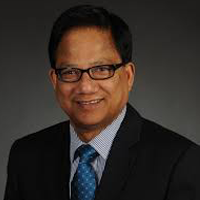




VP Membership Development,
Outreach, and Industry Liaison
Amir Bahman Radnejad
Mount Royal University

Bylaws
A copy of the ASAC bylaws is available here.
Bylaw Overview
1.01 Definitions: In these By-Laws and all other By-Laws of the Corporation, unless the context otherwise requires:
- a. “Act” means the Canada Not-for-profit Corporations Act S.C. 2009, c.23 including the Regulations made pursuant to the Act, and any statute or regulations that may be substituted, as amended from time to time;
- b. “Articles” means the original or restated Articles of incorporation or Articles of amendment, amalgamation, continuance, reorganization, arrangement or revival of the Corporation;
- c. “Board” means the Board of Directors of the Corporation and “Director” means a member of the Board and “Executive Committee” means a subset of the Board of Directors consisting of the Past President, President, Vice President Program, Treasurer, and Secretary;
- d. “By-Laws” means these By-Laws and any other By-Laws of the Corporation as amended and which are, from time to time, in force and effect;
- e. “meeting of members” includes an annual meeting of members or a special meeting of members; a special meeting of all members entitled to vote at an annual meeting of members;
- f. “Regulations” means the regulations made under the Act, as amended, restated or in effect from time to time;
- g. “Required Fee” shall mean any fee, assessment, or other dollar amount required to be paid either in virtue of any bylaw or any resolution of the Board which has been validly passed; and
- h. “special resolution” means a resolution passed by a majority of not less than two-thirds (2/3) of the votes cast on that resolution.
1.02 Interpretation: In the interpretation of these By-Laws, words in the singular include the plural and vice-versa, words in one gender include all genders, and “person” includes an individual, body corporate, partnership, trust and unincorporated organization. The word “Corporation” may on literature of the Corporation be designated as an “Association”. Other than as specified in 1.01 above, words and expressions defined in the Act have the same meanings when used in these By-Laws.
1.03 Corporate Seal: The seal, an impression whereof is stamped in the margin hereof, shall be the seal of the Administrative Sciences Association of Canada (ASAC) Association des sciences administratives du Canada (ASAC) and shall be in the custody of the Secretary and Information Management of the Corporation.
1.04 Execution of Documents: Deeds, transfers, assignments, contracts, obligations and other instruments in writing requiring execution by the Corporation may be signed by any two (2) of: (a) its President and (b) any one of the officers mentioned in Section 4.00 of the present By-Laws. In addition, the Board may from time to time direct the manner in which and the person or persons by whom a particular document or type of document shall be executed. Any person authorized to sign any document may affix the corporate seal (if any) to the document. Any signing officer may certify a copy of any instrument, resolution, By-Laws or other document of the Corporation to be a true copy thereof.
1.05 Financial Year End: The financial year end of the Corporation shall be on December 31 of each year or on such other date as may be determined by the Board of Directors.
1.06 Banking Arrangements: The banking business of the Corporation shall be transacted at such bank, trust company or other firm or corporation carrying on a banking business in Canada or elsewhere as the Board of Directors may designate, appoint or authorize from time to time by resolution. The banking business or any part of it shall be transacted by an officer or officers of the Corporation and/or other persons as the Board of Directors may by resolution from time to time designate, direct or authorize.
1.07 Annual Financial Statements: The Corporation may, instead of sending copies of the annual financial statements and other documents referred to in subsection 172(1) (Annual Financial Statements) of the Act to the members, publish a notice to its members stating that the annual financial statements and documents are available at the registered office of the Corporation and any member may, on request, obtain a copy free of charge at the registered office or by prepaid mail. 1.08 Head Office The Head Office of the Corporation shall be the business address of Board Director in the Secretary and Information Management position.
Board of Directors Roles
President
The President of ASAC is elected by and from the membership for a two-year term. The President chairs the board, plays a leadership role in the development and management of ASAC, oversees the work of the CJAS editor and ASAC staff members, and represents the association in dealings with external parties.
Past President
The position of Past President of ASAC is held by the individual who occupied the position of the President of ASAC in the preceding year. The Past President provides advice to the President and the Board, and takes on special projects.
VP Finance & Treasurer
The VP Finance & Treasurer is elected by and from the membership for a three year term. In addition to participating actively in ASAC meetings, the Treasurer manages ASAC’s financial assets, maintains accurate financial records, oversees investment accounts, and reports on ASAC’s financial position on a regular basis.
VP Program
In addition to participating actively in ASAC meetings, the VP Program organizes the academic components of the annual conference of ASAC and supervises ASAC staff who manage the conference operations.
VP Membership Development, Outreach, and Industry Liaison
The VP Finance & Treasurer is elected by and from the membership for a three year term. In addition to participating actively in ASAC meetings, the Treasurer manages ASAC’s financial assets, maintains accurate financial records, oversees investment accounts, and reports on ASAC’s financial position on a regular basis.
VP Awards & Secretary
The VP Awards & Secretary is elected by and from the membership for a three year term. In addition to participating actively in ASAC meetings, the VP Awards & Secretary oversees the ASAC Awards. Subject to the direction of the Board of Directors, the VP Awards & Secretary also records minutes of all meetings of the Corporation and shall correspond on behalf of the Corporation.
VP Program Elect
The VP Program Elect is elected by and from the membership for a one year term as VP Program Elect and then becomes the VP Program the following year. In addition to participating actively in ASAC meetings, the VP Program Elect determines the conference location for the following year and works with the VP Program to organize the current years’ conference.
Learn about the ASAC Board of Directors.
Nominations & Elections
Election of Board of Directors
The nominating committee consisting of the President and Past President will send to members, calls for nominations for any open positions for President, Vice-Presidents, Secretary & Information Management, and Treasurer by February 1 of the year of the election.
Nominations of Corporation officer candidates will be made by any member, who may nominate themselves or another member. A written nomination (via e-mail) is to be sent to the nominating committee no later than March 1 (unless otherwise indicated in the nominations) of the year of the election.
Nominees may be contacted by the nominating committee to ensure interest and qualifications. The nominating committee will present the nominees to members by sending out an e-mail vote no later than April 1 with returns no later than May 1 (unless otherwise indicated in the nominations).
The candidate(s) with the largest number of votes shall be declared elected. The new slate will be announced and approved at the ASAC conference meetings.
Election of Divisional Officers
Divisional officers shall be nominated and elected by members of the Division in a manner determined by the Division. Election of any other elective members of the board of directors shall be as follows:
- Each member of the Association has the right to vote for as many candidates as there are places to be filled.
- Those candidates who receive the largest number of votes shall be declared elected.
Privacy & Code of Ethics
ASAC Privacy Statement
ASAC only collects personally identifiable information about individuals when such individuals specifically and explicitly provide such information on a voluntary basis during the registration process for ASAC membership or while creating an account on ScholarOne, the article management system used by the Canadian Journal of Administrative Sciences (CJAS). ASAC will provide member name and address information to the publisher of CJAS where members have opted to receive their journal in hard copy through the mail. Personally identifiable information on individual users will not be sold or otherwise transferred to unaffiliated third parties. ASAC reserves the right to contact a member, author, and/or reviewer regarding account status and other matters relevant to the underlying service and/or the information collected.
ASAC members have the right to delete their account at any time, and upon doing so all personal identifiable information will be deleted from all servers, databases, and records.
The ScholarOne and CJAS sites use cookies. “Cookies” are small text files a web site can use to recognize repeat users, facilitate the user’s ongoing access to and use of the site and allow a site to track usage behavior and compile aggregate data that will allow content improvements and targeted advertising. Cookies are not programs that come onto a user’s system and damage files. Generally, cookies work by assigning a unique number to the user that has no meaning outside the assigning site. Users should be aware that ASAC cannot control the use of cookies or the resulting information by advertisers or third parties hosting data for ASAC, and strongly recommends that users consult the privacy policies of any third party sites hosting data related to ASAC, including ScholarOne and Wiley. If a user does not want information collected through the use of cookies, there is a simple procedure in most browsers that allows the user to deny or accept the cookie feature; however, users should note that cookies may be necessary to provide the user with certain features (e.g., customized delivery of information) available on the Site.
The forgoing policies are effective as of April 23, 2018. ASAC reserves the right to change this policy at any time by notifying users of the existence of a new privacy statement. This statement and the policies outlined herein are not intended to and do not create any contractual or other legal rights in or on behalf of any party.
Code of Ethics
General Guidelines and Code of Ethics for Refereed Scholarly Program1
Important Information for All Submitters
Articles It is the duty of ASAC members conducting research to design, implement, analyze, report, and present their findings rigorously. Research rigor includes careful design, execution, analysis, interpretation of results and retention of data. Presentation of research should include treatment of the data that is honest and that reveals both strengths and weaknesses of findings. Authorship and credit should be shared in correct proportion to the various parties’ contributions. Whether published or not, ideas or concepts derived from others should be acknowledged, as should advice and assistance received. Authors should also guard against plagiarizing the work of others. Plagiarism is defined as:
- The failure to give sufficient attribution to the words, ideas, or data of others that have been incorporated into a work, which an author submits for academic credit or other benefit. Attribution is sufficient if it adequately informs and, therefore, does not materially mislead a reasonable reader as to the source of the words, ideas, or data. Attribution (or the lack thereof) is materially misleading if it could cause a reasonable reader to be mistaken as to the source of the words, ideas, or data in a way that could benefit the author submitting the work. (Emphasis added).2
- Furthermore, submitted papers must not be currently under consideration or have been previously presented or scheduled for presentation, published, accepted for publication and if under review, must not appear in print before ASAC meetings. Members should notify appropriate division chairs or committees regarding the practices or actions of members they believe may violate ASAC regulations or general standards of ethical conduct.
Members/Presenters To encourage meaningful exchange, ASAC members should foster a climate of free interchange and constructive criticism within the association and be willing to share research findings and insights fully with other members.
ASAC is a voluntary association whose existence and operations are dependent on cooperation, involvement and leadership from its members. Members should honor all professional commitments, including presentation of accepted papers and participation in scheduled roles as chair, discussant or panel member. If absence from a scheduled meeting is unavoidable, members must contact appropriate individuals and pursue suitable alternative arrangements. Leaders have the same responsibilities to perform their obligations and responsibilities in a timely, diligent and sensitive manor, without regard to friendships or personal gain.
1 These guidelines have been adapted with permission from the Academy of Management
2 Discipline: An Academic Dean’s Perspective on Dealing with Plagiarism. Brigham Young University Education & Law Journal, 2004 Issue 2, p441-448
AGM / AGA
Annual General Meeting Documents
[memberonly]
ASSEMBLÉES GÉNÉRALES ANNUELLES // ANNUAL GENERAL MEETINGS
AGA 2024 // AGM 2024
L’assemblée générale annuelle de l’ASAC 2024 aura lieu le dimanche 2 juin 2024 à 12 h HE. // The ASAC 2024 Annual General Meeting will be held on Sunday, June 2, 2024 at 12:00pm ET.
- Ordre du jour de l’AGA 2024 de l’ASAC // ASAC 2024 AGM Agenda
- Procès-verbal de l’AGA 2023 de l’ASAC // ASAC 2023 AGM Minutes
- ASAC États financiers 2023 // ASAC 2023 Financial Statements
- Changements dans les rôles du conseil d’administration // Changes in board roles
AGA 2023 // AGM 2023
L’assemblée générale annuelle de l’ASAC 2023 s’est tenue le lundi 5 juin 2022 à 12 h 00 HAE. // The ASAC 2023 Annual General Meeting was held on Monday, June 5, 2022 at 12:00pm EDT.
AGA 2022 // AGM 2022
L’assemblée générale annuelle 2022 de l’ASAC s’est tenue le lundi 6 juin 2022 à 13 h HAA. // The ASAC 2022 Annual General Meeting was held Monday, June 6, 2022 at 1:00pm ADT.
AGA 2021 // AGM 2021
L’assemblée générale annuelle de l’ASAC 2021 s’est tenue virtuellement le dimanche 13 juin 2021 à 9 h 00 HAE. // The ASAC 2021 Annual General Meeting was held virtually on Sunday, June 13, 2021 at 9:00am EDT.
AGA 2020 // AGM 2020
L’assemblée générale annuelle de l’ASAC 2020 s’est tenue le lundi 11 janvier 2021 de 13 h 00 à 15 h 00 HNE. La réunion a été retardée en raison d’un retard dans le traitement de nos états financiers de 2019 en raison de la pandémie de COVID-19. La réunion s’est tenue virtuellement. // The ASAC 2020 Annual General Meeting was held Monday, January 11, 2021 from 1:00pm to 3:00pm EST. The meeting was delayed due to a delay in the processing of our 2019 financial statements due to the COVID-19 pandemic. The meeting was held virtually.
- AGM 2020 Minutes
- AGM 2020 Agenda
- 2019 Financial Statements
- CJAS EIC Report 2020
- CJAS Financial Statements June 2020
- CJAS 2020 Marketing Plan
- CJAS Publisher’s Report 2019
AGA 2019 // AGM 2019
L’AGA 2019 de l’ASAC a eu lieu le dimanche 26 mai 2019 à 8 h 30 HAE à St. Catharine’s, en Ontario, pendant la conférence annuelle de l’ASAC. / / The ASAC 2019 AGM was held on Sunday, May 26, 2019 at 8:30am EDT in St. Catharine’s, ON, during the ASAC Annual Conference.
Vous devez être connecté pour poster un commentaire.